
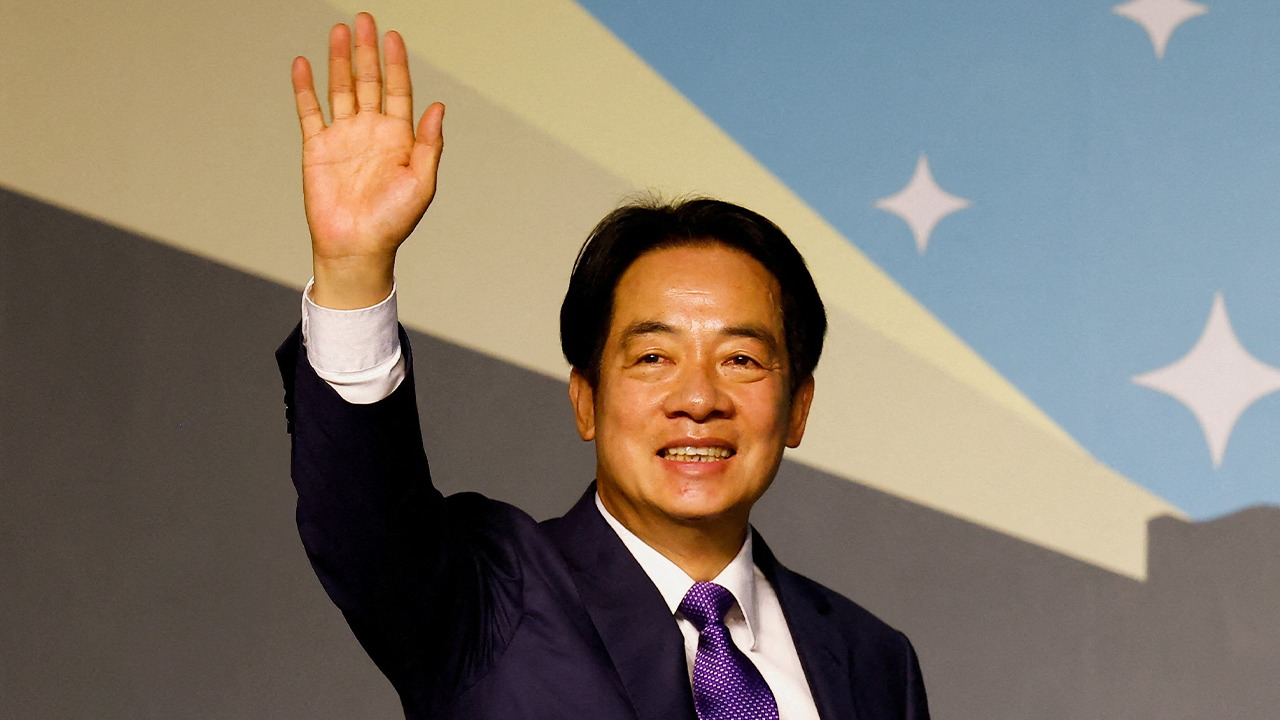
Lai Ching-Teh, Taiwan’s new president, has had a life marked by hardship and resilience. Born into a family that struggled after his father’s tragic death in a coal mining accident, Lai grew up in poverty. His mother worked multiple odd jobs to support Lai and his five siblings, instilling in him the courage to pursue his dreams despite their dire circumstances.
Lai aspired to become a doctor, and his determination led him to earn a bachelor’s degree in physical medicine. He attended medical school in Tainan and embarked on a promising career as a physician. However, Taiwan’s political landscape in the late 1980s began to draw him towards a different path.
During this period, Taiwan was under the authoritarian rule of the Kuomintang (KMT), which suppressed political dissent. The Democratic Progressive Party (DPP) emerged as a response to this repression, advocating for democracy. Lai, having participated in a DPP campaign during college, was familiar with the party’s goals. Despite his initial reluctance to abandon his medical career, China’s aggressive actions towards Taiwan in 1996, including missile tests and live-fire exercises, motivated him to enter politics and stand up for his country.
Now, at 64, Lai Ching-Teh is poised to become Taiwan’s president. His political journey has seen him serve as a legislator, the mayor of Tainan, the premier, and since 2020, the vice president. Known also as William Lai, he has been labeled a “dangerous separatist” by Beijing due to his stance on Taiwan’s independence.
China views Taiwan as part of its territory and has intensified its rhetoric and actions under President Xi Jinping, who aims for unification. China’s interference in Taiwan’s recent elections, favoring the pro-China KMT candidate Hu Youyi and warning against voting for the DPP, backfired. The electorate, spooked by China’s threats, largely supported the DPP, reinforcing Taiwan’s shift away from Beijing.
Lai’s victory is significant, as it reflects the Taiwanese public’s desire to distance themselves from China. Currently, less than 10% of Taiwan’s population supports unification with China, and only 3% identify as Chinese. Lai’s election is a testament to the people’s faith in maintaining their sovereignty and autonomy.
With 40% of the popular vote, Lai’s DPP secured 51 out of 113 seats in the legislature, though they lost their majority. This constraint will shape Lai’s administration. Nonetheless, his victory broke Taiwan’s eight-year curse, marking the DPP’s third consecutive term in power since Taiwan became a democracy.
Lai aims to continue the policies of his predecessor, Tsai Ing-wen, who maintained that Taiwan is already a sovereign state, thus avoiding the need for a formal declaration of independence. While Tsai cultivated close ties with Western nations and stood firm against China, she was known for her cautious approach. Lai, however, has a more radical background and has previously advocated for Taiwan’s formal independence.
During his campaign, Lai expressed a commitment to maintaining the status quo, emphasizing dialogue over confrontation with China. However, Beijing remains wary, citing Lai’s past declaration of being a “practical worker for Taiwan independence” as a cause for concern. Consequently, Lai is banned from traveling to mainland China and Hong Kong, and Beijing often rebukes him, labeling him a warmonger.
The already tense situation in the Taiwan Strait is unlikely to improve under Lai’s presidency. China continues its military presence near Taiwan, and diplomatic relations have been strained since 2016. Lai plans to bolster Taiwan’s military, strengthen alliances with the United States, Europe, and Japan, and enhance economic security.
Despite these challenges, Lai hopes to foster better relations with China. He even expressed a desire to have dinner with Xi Jinping to discuss easing tensions. As Taiwan’s new leader, Lai’s tenure will be closely watched, both for how he navigates domestic politics and how he manages the delicate and often hostile relationship with China.